The Definitive Directory of the Global Web
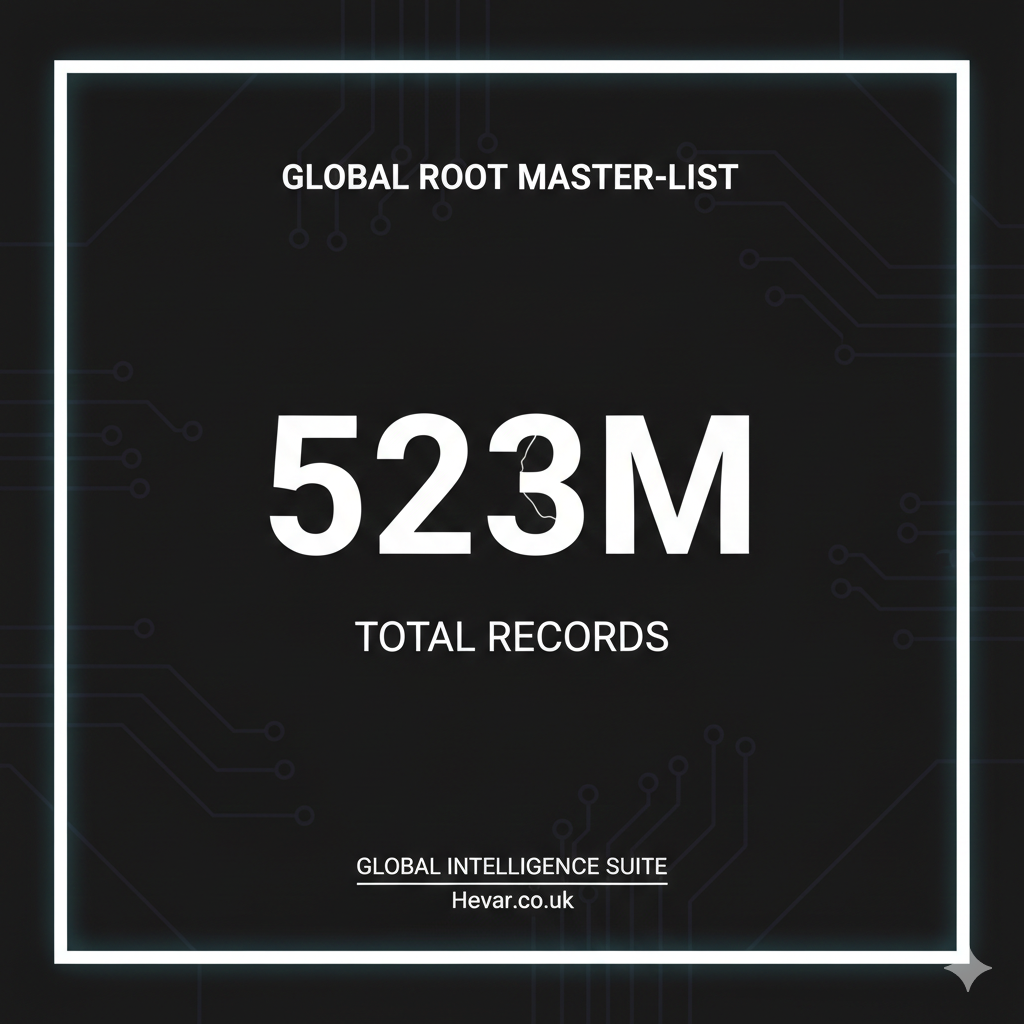
Data is the currency of the modern digital economy, but only if it is clean, structured, and comprehensive. The Hevar Global Root Domain Master-List provides an exhaustive map of 523,052,937 unique root domains, covering every major TLD, gTLD, and regional ccTLD in existence.
From Fortune 500 infrastructure to niche regional blogs, this dataset captures the backbone of the internet. We’ve handled the heavy lifting of crawling, aggregating, and normalizing half a billion records so your team can focus on extracting insights, not managing messy data.
Key Data Highlights
Massive Scale: 523,052,937 verified root domains.
Global Coverage: Full inclusion of .com, .net, .org, plus hundreds of country-code top-level domains (ccTLDs).
High-Fidelity Data: Scrubbed of duplicates, invalid syntax, and “parked page” noise where possible.
Database Ready: Delivered in optimized formats (CSV/TSV) for instant ingestion into BigQuery, Snowflake, or local SQL environments.
Strategic Use Cases
SEO & Competitive Intelligence: Identify new market entrants, monitor backlink profiles, and analyze TLD saturation across industries.
Brand Protection & Legal: Monitor for typosquatting, trademark infringement, and unauthorized brand usage across the entire global domain space.
Marketing & Lead Gen: Build hyper-targeted outreach lists by filtering domains by TLD or keyword strings.
Cyber Asset Management: Cross-reference known corporate assets against the global pool to identify shadow IT or forgotten registrations.
Technical Specifications
Total Records: 523,052,937
Fields Included: Root Domain, TLD, [Optional: Length/Entropy Score].
Format: Optimized for high-speed processing (CSV/UTF-8).
Delivery: Instant secure download via high-speed encrypted link (S3/Cloud).
Last Update: Current snapshot as of [Month/Year].
The Hevar Advantage: In the world of big data, “noise” is your biggest enemy. Our Root Domain Master-List is specifically curated to provide the highest signal-to-noise ratio, ensuring your scripts and databases run efficiently without choking on malformed strings.

